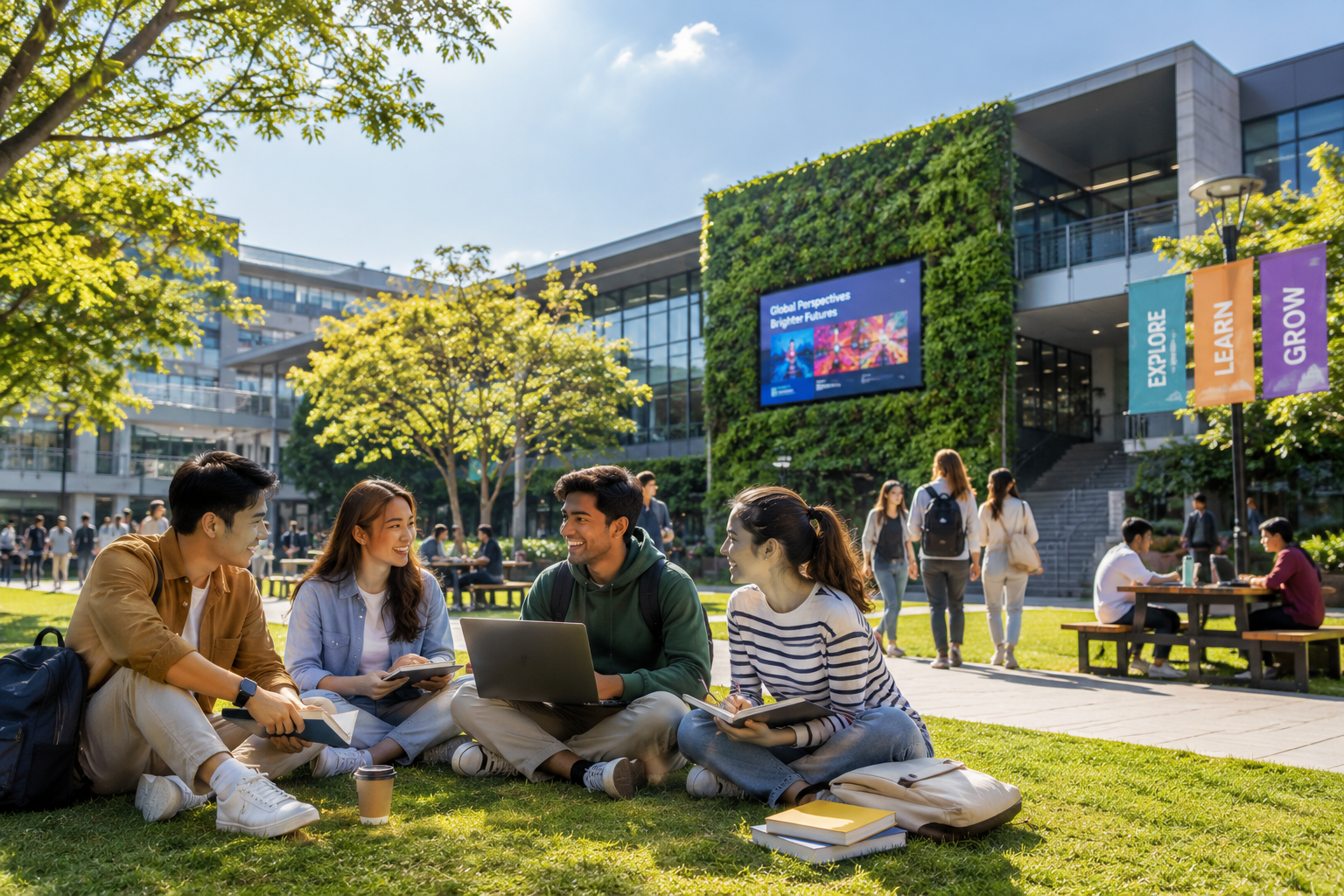
Browse courses that lead to real careers.
All listed programmes are offered by CPE-registered, EduTrust-certified colleges. Compare side-by-side, then apply through PathPort — free.
Diploma Types Explained
Four diploma tiers, four different stories.
Singapore’s private college diploma ladder is built so you can enter at the level that fits your background — and stack qualifications over time.
Diploma
Foundation
Entry-level qualification recognised across Singapore and most ASEAN employers. Practical, industry-focused curriculum built around what employers actually hire for.
Who it’s for
Students completing 10th or 12th standard (CBSE, ICSE, State Board) who want a structured, faster route into industry than a 3–4 year degree programme.
Typical duration
12–18 months typical
Varies by institution.
Typical subject areas
What’s next
Progress to Advanced Diploma, enter the workforce, or apply for university advanced standing.
Diploma
Foundation
Entry-level qualification recognised across Singapore and most ASEAN employers. Practical, industry-focused curriculum built around what employers actually hire for.
Who it’s for
Students completing 10th or 12th standard (CBSE, ICSE, State Board) who want a structured, faster route into industry than a 3–4 year degree programme.
Typical duration
12–18 months typical
Varies by institution.
Typical subject areas
What’s next
Progress to Advanced Diploma, enter the workforce, or apply for university advanced standing.
Advanced Diploma
Intermediate
Builds directly on a Diploma qualification with deeper subject mastery, specialisation, and management skills. The natural next step for diploma graduates.
Who it’s for
Students who hold a Diploma or equivalent qualification and want to deepen their expertise before entering a degree or senior role.
Typical duration
12–18 months typical
Varies by institution.
Typical subject areas
What’s next
Stack into a Higher Diploma, enter the workforce in a more senior role, or apply for degree entry.
Advanced Diploma
Intermediate
Builds directly on a Diploma qualification with deeper subject mastery, specialisation, and management skills. The natural next step for diploma graduates.
Who it’s for
Students who hold a Diploma or equivalent qualification and want to deepen their expertise before entering a degree or senior role.
Typical duration
12–18 months typical
Varies by institution.
Typical subject areas
What’s next
Stack into a Higher Diploma, enter the workforce in a more senior role, or apply for degree entry.
Higher Diploma
Near-Degree
The most advanced diploma tier — comparable in academic depth to the first year of a Bachelor's degree. Many universities accept Higher Diploma graduates with advanced standing.
Who it’s for
Students aiming for a degree but who prefer to spread the cost and time, or who want a strong professional qualification on its own.
Typical duration
18–24 months typical
Varies by institution.
Typical subject areas
What’s next
Direct entry into Year 2 or Year 3 of a Bachelor's programme in Singapore, the UK, Australia, or Canada (university-dependent).
Higher Diploma
Near-Degree
The most advanced diploma tier — comparable in academic depth to the first year of a Bachelor's degree. Many universities accept Higher Diploma graduates with advanced standing.
Who it’s for
Students aiming for a degree but who prefer to spread the cost and time, or who want a strong professional qualification on its own.
Typical duration
18–24 months typical
Varies by institution.
Typical subject areas
What’s next
Direct entry into Year 2 or Year 3 of a Bachelor's programme in Singapore, the UK, Australia, or Canada (university-dependent).
Specialist Diploma
Specialisation
Applied, industry-aligned qualifications built for a specific role or technology. Often shorter and frequently designed for working professionals as well as fresh graduates.
Who it’s for
Diploma or degree holders looking to upskill in a focused domain, plus working professionals seeking certification without committing to a full degree.
Typical duration
6–12 months typical
Varies by institution.
Typical subject areas
What’s next
Directly into a specialised role, or stack with other diplomas for a broader skill portfolio.
Specialist Diploma
Specialisation
Applied, industry-aligned qualifications built for a specific role or technology. Often shorter and frequently designed for working professionals as well as fresh graduates.
Who it’s for
Diploma or degree holders looking to upskill in a focused domain, plus working professionals seeking certification without committing to a full degree.
Typical duration
6–12 months typical
Varies by institution.
Typical subject areas
What’s next
Directly into a specialised role, or stack with other diplomas for a broader skill portfolio.
Career Outcomes
Where Singapore diploma graduates actually work.
Honest snapshots by sector — based on what PathPort partner colleges report. Outcomes vary by programme, internship performance, and the individual student.
Business & Management
Common first roles
- Business Operations Analyst
- Sales / Account Executive
- Marketing Coordinator
The broadest sector. Most diploma graduates find their first role here — operations, sales, marketing, or junior account management — at SMEs, MNCs, and start-ups across Singapore and India.
Information Technology
Common first roles
- Junior Software Engineer
- IT Support Specialist
- Data Analyst
Strong demand in both Singapore and Bangalore/Hyderabad. IT diplomas with internship components are particularly competitive — many graduates land technical roles at FinTech, e-commerce, and SaaS companies.
Hospitality & Tourism
Common first roles
- Hotel Operations Trainee
- Restaurant Floor Manager
- Events Coordinator
Singapore is a hub for luxury hospitality. Diploma graduates often start in supervisory or trainee management programmes at international hotel chains, restaurant groups, and conference venues.
Design & Creative
Common first roles
- Junior UX/UI Designer
- Brand & Visual Designer
- Motion / Video Designer
Smaller but growing. Design diploma graduates often work agency-side or in-house creative teams. Singapore’s start-up scene has created consistent demand for product designers.
Mass Communication
Common first roles
- Content Producer
- Junior PR / Communications Executive
- Digital Marketing Specialist
Roles span agency, brand-side, and media. Graduates often work in social media, brand campaigns, journalism, or production. Useful pathway into broader marketing careers.
Education & Healthcare Support
Common first roles
- Early Childhood Educator
- Healthcare Administrator
- Allied Health Assistant
Specialised programmes (Early Childhood Education, Healthcare Management, Psychology) lead into care, education, and clinical-support roles. Often regulated — confirm licensing requirements with your college.
Duration Guide
How long programmes actually take.
These ranges are typical across Singapore’s private college sector. Your specific programme may be shorter or longer depending on intake schedule, internship structure, and the college.
Diploma
- Full-time
- 12 – 18 months
- Part-time
- 18 – 24 months
- Internship
- Optional, structured
Advanced Diploma
- Full-time
- 12 – 18 months
- Part-time
- 18 – 24 months
- Internship
- Common (3 – 6 months)
Higher Diploma
- Full-time
- 18 – 24 months
- Part-time
- 24 – 30 months
- Internship
- Common (6 months)
Specialist Diploma
- Full-time
- 6 – 12 months
- Part-time
- 9 – 15 months
- Internship
- Rare (often working professionals)
Actual duration varies by institution.
Every Singapore private college sets its own intake schedule, credit structure, and internship integration. The numbers above are typical for the sector — confirm the exact duration on each programme’s individual course page or with a PathPort advisor.
The Directory
0 programmes ready to apply to.
Filter by subject, level, college, and budget — or compare up to three side by side.
Showing 0 of 0 courses
No courses found
Clear filtersFAQs
Frequently asked questions.
What is the difference between a Diploma and an Advanced Diploma?
A Diploma is the foundation-level qualification, typically 12–18 months. An Advanced Diploma builds directly on a Diploma — it requires a Diploma (or equivalent) as a prerequisite and adds specialised, intermediate-level training. Many students complete a Diploma first, work or intern for a year, and then return for an Advanced Diploma.
How is a Higher Diploma different from a degree?
A Higher Diploma is the most advanced tier of Singapore's private college diploma ladder, and is often considered comparable in academic depth to the first year of a Bachelor's degree. It is awarded by a private college, not a university. Many universities in Singapore, the UK, Australia, and Canada accept Higher Diploma graduates into Year 2 or Year 3 of a degree programme (advanced standing). Acceptance is decided on a case-by-case basis by each university.
What is a Specialist Diploma?
A Specialist Diploma is a focused, applied qualification designed for a specific industry role or technology. They are usually shorter (6–12 months) and often built for working professionals as well as fresh diploma or degree holders. Examples include Cybersecurity Operations, Digital Business Transformation, Culinary Arts, and Project Management.
How much do Singapore diploma programmes cost?
Tuition fees at Singapore private colleges typically range from SGD 4,000 to SGD 8,000 per academic year, varying by institution, programme, and level. PathPort displays the actual published fee for each programme on its detail page. Living costs in Singapore add another SGD 800–1,200 per month.
How long do diploma programmes actually take?
Diploma programmes typically run 12–18 months full-time; Advanced Diplomas are 12–18 months; Higher Diplomas are 18–24 months; Specialist Diplomas are 6–12 months. Actual duration varies by institution, intake schedule, and whether the programme includes an internship. Always check the duration listed on the specific course page.
Do all programmes include an internship?
No. Internship integration varies by college and programme. Some programmes (especially in Business, Hospitality, and IT) follow Singapore's 6+6 model — six months of classroom learning followed by six months of paid internship. Others offer optional internships, and some are purely classroom-based. Each PathPort programme listing shows whether an internship is included.
Can I switch to a different programme after I start?
Programme transfers are possible at most Singapore private colleges, subject to availability of seats and credit-recognition policies. Talk to your PathPort advisor before paying any fees if you're uncertain — switching after enrolment can affect your Student Pass and fee schedule.
How do I know which programme is right for me?
Three honest checks: (1) does the curriculum match a career you can name, (2) does the duration and fee structure fit your budget, and (3) is the college EduTrust-certified. Beyond that, talk to a PathPort advisor — we'll walk you through the actual programme content, intake dates, and what graduates from each programme tend to do next. Free, no commitment.
Ready to apply?
Register free and apply to any Singapore diploma programme — PathPort guides you from application through arrival.